Monday, December 24, 2007

i miss the subway

nyc subway - 1964

nyc subway - 1964


nyc subway - 1972

nyc subway - 1972
designed by Massimo Vignelli


ny subway cover - 1972

ny subway cover - 1972


from design observer:

"In 1968, Unimark International was commissioned to design a sign system for the subways, and out of this chaos came order. Two Unimark designers, Bob Noorda and Massimo Vignelli, developed a signage plan based on a simple principle: deliver the necessary information at the point of decision, never before, never after. [...] Out with the complicated tangle of geographically accurate train routes. No more messy angles. Instead, train lines would run at 45 and 90 angles only. Each line was represented by a color. Each stop represented by a dot. What could be simpler?"

nyc subway - 2005

nyc subway - 2005


nyc subway -- 2007

nyc subway -- 2007


nyc subway - blank template!

nyc subway - blank template!
this makes me happy. and terrified.

this is for laura

mugs.

pantone-mug

pantone-mug


memo mugs

memo mug 3

memo mug 4
memo mug 2
memo mug


here's a poster by sagmeister, where the image is made with coffee cups (kinda related to mugs, right?) in different "cream gradients"

sagmeister poster

paper art

brian dettmer - log


brian dettmer - log


brian dettmer - eye's ornament

brian dettmer - eye's ornament


brian dettmer - the physiological basis of medical practice

brian dettmer - the physiological basis of medical practice


peter callesen - little erected ruin

peter callesen - little erected ruin


peter callesen - the short distance between time and shadow

peter callesen - the short distance between time and shadow


jen stark - coriolis effect

jen stark - coriolis effect


jen stark - cylinder

jen stark - cylinder


jen stark - circle

jen stark - circle


jen stark - triangle

jen stark - triangle

cara_barer

cara_barer


jack wang thesis poster

jack wang thesis poster


jack wang thesis poster detail

jack wang thesis poster detail


hey andreas, i did these with quickrpickr and it works well. another benefit: it makes me much more attentive to my flickr stuff.

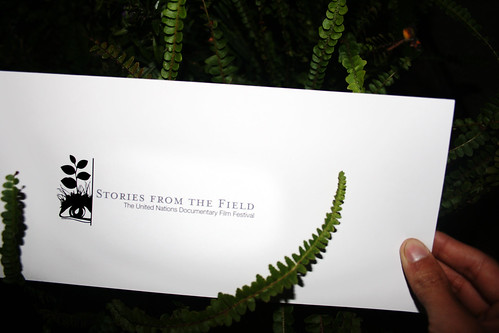
stories from the field

andreas entered a competition to create a logo for the UN film festival. the festival was themed "stories from the field."


here are other entries i thought were nice:


logo2_440x400_


UN_logo_1_440x400_


shards_440x400_


c2_i1_440x400_


Stories_Logo_5a_Chris_Dina_copy_440x400_


Eyewitness_440x400_


christian_champagne1_440x400_


a quickr pickr post

Sunday, December 23, 2007

catching up. archives. worries.

i'm always too optimistic about my productivity. i had big plans for this, my last winter vacation. my visions encompassed a new online portfolio, scores of job applications, screenprinting, reading through seven or so books on rhizomes, complexity theory, and geophilosophy, and catching up on blogging.

but everything is getting bogged down because i forgot how much time i waste everyday just being around all my possessions. it feels so...pleasant and borderline nostalgic to be in the room that led me through high school and to have the wonderful chore of going through all the things that have fallen into disorganization while i've been gone the past few years.

magazines. i've been reading all the magazines that had continued to come in my absence. and rereading the ones that deserve it, several years after their publications. i have been disastrously trying to sort through my closet, which-- via my mother's good intentions-- has become bloated through the store-closing sales of a local department store and is now uncomfortably swollen with clothes and accessories. and i spend about fifteen minutes each morning repositioning the tom clancy hardcovers that are holding up my broken bed. i detangle necklaces for an hour and don't notice that time has passed.

in short, my vacation has been distracted with my own brand of domesticity. i am about fed up with it, but as soon as i feel productivity coming on again, a carful of family members roll up from new jersey. i'm happy to see them and to be in a household that feels like it has something to do every day, but all the same, this bodes poorly for my portfolio etc.

part of my hesitancy, though, is rooted in a bizarre ideological paralysis i'm having about how to organize myself and my thoughts. before leaving stanford for birmingham, i arrived in andreas's loft space, flustered, near-militant, and demanded that he sit down and figure out how i was going to archive my life.

with blogging, flickr, facebook, all the various files and formats on my computer, on my external hard drive, the logbooks that keep multiplying, the files of clippings that have yet to make it into the logbooks.... we have all these methods of making, keeping, and storing things, but i feel like i'm engaging all these archives without an idea of what kind of work i want them to do for me in the future.

the way i see it, the archive has been based on "retrieval," or being able to go back and find something later. but how often do we go back and look for something specific? sites like flickr or digg are really good at sharing things between lots of people in a given slice of time, but will the site with the most diggs on a monday even matter the next friday? when will anyone ever go looking back for that stuff? ...it comes down to "relevance" and what that means in a cultural semantic. right now, time and keywords determine relevance, but should we be searching by "relevance" at all?

clearly, we don't yet have criteria for what is "good," "useful," and "important" in the storing and organizing of information. i t would be nice if data could be informative in real-time, all the time. because no matter how good or thorough your tagging is, tagging only contextualizes things with that capcity that you, the user, are capable of tagging it in a given moment in time. i guess i want my archive to be better than i am at organizing and figuring out the potential in things. i want it to be able to draw connections that i might not be able to see.

so... all this to say: i'm not doing so well with blogging. i don't post often enough and certainly don't always post the things that i really should be archiving/sharing. sometimes it feels like too much of a hassle to scan something, so i won't blog it at all. and sometimes i feel a weird guilt about writing too much or else putting up too many images. and i am definitely deterred from posting about something if it seems "achronological." which is stupid, especially, since i think that chronology can be the most retarded organization-crutch to fall back on.

anyways. i shall be blogging haphazardly since i don't have any better ways of doing things. quickrpickr will help, i think. its a flickr app that will help me put images up better. and i'm going to try to keep up my flickr stuff better. captions? tags? who knows. all that stuff annoys me but it's probably a good idea. archiving seems to be a hard business.

any suggestions?

Sunday, December 9, 2007

rain

have you ever felt that rain is just one big negative feedback loop?

when it's raining, people are generally upset at the absence of sun. but they have to go out regardless, so they exit their residence and quickly discover (if they are a stanford student, anyway,) that they cannot bike due to the rain. ultimately, rain causes people to be later than they would otherwise be-- and so lateness, in this case, can be viewed as a negative feedback signal that tells you "it's raining."

but then, since you can't bike, you're walking to class. your reduced speed means you're spending even more time out in the rain, despite the fact that you dislike rain more than you dislike sun and thus, would rather spend less time outdoors when it's raining.

as you're walking, your shoes kick up water and your pants drag a little on the ground. you get wet, and because of water cohesion, your pants get wetter and wetter as the water absorbs upwards. more time spent outdoors (which you don't want to be spending anyway), means wetter pants.

and then, since your pants are soaking up more and more water, they're increasingly heavy. which means that they drag more and pick up water at a much faster rate.

by the time you finally get inside, your pants legs are so wet, that it's almost more irritating to be indoors than to be outdoors. which means that rain has spoiled even the initial positive option: that one would prefer indoors to outdoors.

and of course, you and everyone else have tracked the outdoors into the indoors, which means that all this negative feedback has actually changed the system and deteriorated it. things are slippery, dangerous, and dirtier. wet umbrellas are annoying and everywhere. i can't think of a single thing that is positively introduced to the indoors on rainy days...


the point of all this is to say that there are a lot of systems out there that are modeled like this. computer/tech interfaces come to mind (i.e. error messages that just interrupt you to tell you, alarmingly, that things are wrong but not how to fix it). i think we all get to a point where we just accept it.

but wouldn't it be great if we were able to deal with systems like that and actually do something different and insightful? or at least avoid creating rainy day systems in the first place?

when did staples become so iconic?

saw this on nytimes book design review: a promo video for a novel, the gum thief, by douglas coupland.


question one: when did book releases start warranting youtube videos?
question two: since when did staples have such an iconic brand language?

just seeing the taupe-painted rafters of the ceiling in this video gave me that incredible sense of productive calm that i get every time i walk into a staples... (if anyone didn't know, i have a total office supply fetish.) plus, this video really illuminates the whole signage-as-brand thing that you see in these kind of large stores. those black signs with white type (helvetica, of course, but narrow? bold?)-- could this video be anywhere else?